Whisky tasting isn’t about guzzling down a dram and guessing the ABV. It’s a fun and immersive experience that engages your senses, unpacks history, and reveals craftsmanship in every drop. Whether you’re sipping Scotch, Bourbon, or Japanese whisky, the fundamentals of nosing, sipping, and scoring remain universal.
How to begin
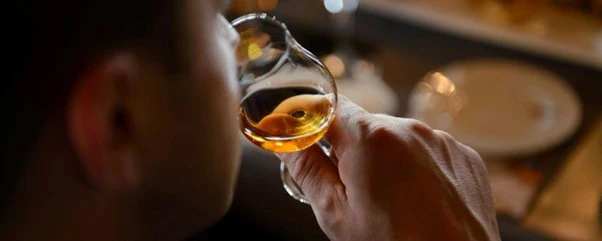
Start with the glass. A tulip-shaped Glencairn glass concentrates aromas and allows for proper swirling. Pour a small measure—25 to 35 ml—and let it breathe for a moment. Take note of the colour. A deep amber might hint at longer cask aging or sherry influence, while a pale gold suggests bourbon barrels or younger spirit.
The Smell
Now, nose it. Bring the glass to your nose and inhale gently with your mouth slightly open. Don’t dive in too fast—ethanol can overwhelm your senses. Try to pick out layers: fruit, floral, spice, wood, smoke. You might get dried apricot, vanilla, oak, brine, or leather depending on the cask and spirit style. Swirl the glass and repeat. Water can help; a few drops open up the whisky, revealing subtle aromas that were initially locked away.
The best bit, tasting!
Time to taste. Take a small sip and let it coat your tongue. Notice the mouthfeel—is it oily, dry, creamy? Focus on three key areas: the arrival (first impressions), the development (how flavours evolve mid-palate), and the finish (the aftertaste and how long it lingers). Flavour notes might shift as you go: orchard fruit giving way to pepper, or honey melting into smoky peat. The fun part here is the taste and notes that come to you, it can be anything. Those hard cola sweets you remember as a kid, custard cream biscuits, anything you can think of! There is no wrong answer here, let your mind go to work.
How to score your whisky
Scoring is subjective but useful. Many enthusiasts use a 100-point scale, breaking it down into aroma (25), taste (25), finish (25), and balance (25). Others just jot down notes and rank relative to favourites. The most important rule? There’s no wrong answer—if you enjoy it, it’s a good whisky.